Stargazing Atacama: Earth's Clearest Nocturnal Heavens
Journeying across Northern Chile's hyper-arid plateaus to witness the galactic core unfiltered by moisture or light.
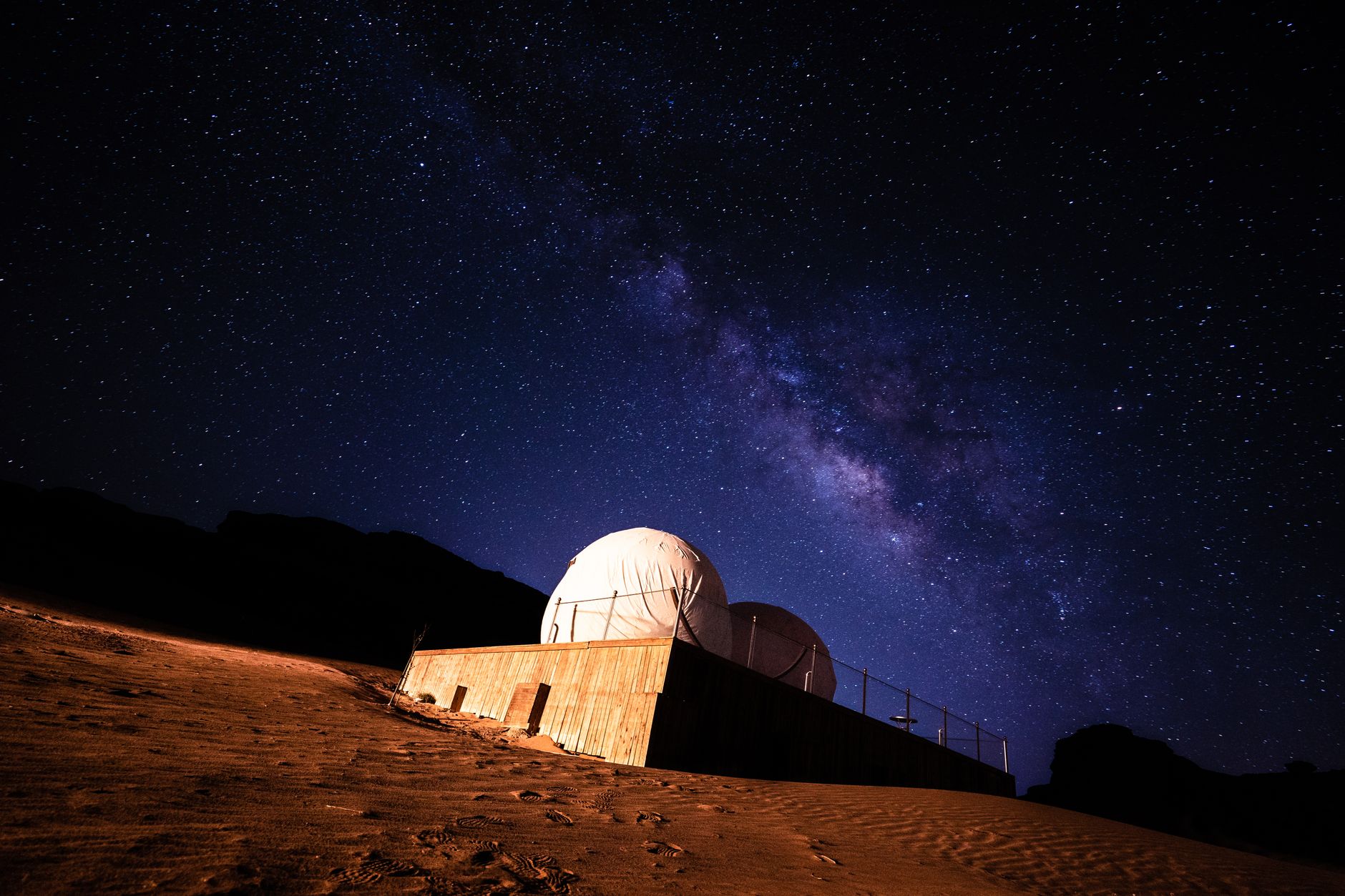
At 2,400 meters above the sea in the shadow of the Licancabur volcano, moisture disappears from the air. The landscape resembles the surface of Mars: red dunes, crusts of lithium salt, and sky of pure lapis lazuli.
The Dry Heart of the Hemisphere
The Atacama Desert is wedged between two high cordilleras, creating a double rain-shadow effect that makes it the driest non-polar desert on the globe. With zero cloud cover for more than three hundred nights a year, it has become humanity's premier portal into the cosmos.
We met with local astrophysicists at an independent observatory near San Pedro de Atacama. Looking through high-magnification optical lenses, the Magellanic Clouds ceased to be faint smudges and resolved into millions of pinpoint suns spinning in gravitational harmony.
“Standing in the desert darkness, you do not look up at the universe; you realize that you are suspended directly inside it.”
The Salt Flats of Laguna Chaxa
During daylight hours, the high salt flats reflect the Andes with mirror-like fidelity. Andean flamingos wade through the brine lagoons, filtering micro-algae with surreal grace against the rust-tinted mountains. The silence here is total, punctuated only by the occasional fracture of expanding salt crusts under the equatorial sun.
- Acclimatization: Spend at least 48 hours in San Pedro before venturing higher toward the geysers of El Tatio (4,320m).
- Thermal Protection: Desert temperatures plummet from 28°C at midday to below freezing after sunset.
- Night Sky Protocol: Avoid using white flashlights; red lights preserve human night vision for cosmic contemplation.
The Atacama reminds us that barrenness is not emptiness. In its stark, wind-carved horizons lies an austere beauty that reorganizes one's understanding of scale and time.